What the Well is Creatine?
I remember when I was first introduced to creatine by my college roommate’s friend. She told me her brother would take it for wrestling to “bulk up.” That was enough for me to vow never to take it. I thought it was only meant for men, and only meant for people trying to look like the hulk. Obviously I was incorrect in my assumptions.
Creatine is one of the most well studied supplements, especially in exercise science and sports nutrition. Its effects on skeletal muscle outputs, such as: strength, lean muscle mass building, function, and performance have been studied for over 30 years, across hundreds of randomly controlled trials.
It is generally regarded as safe, effective, and evidence-based by the International Sports Society of Nutrition, American College of Sports Medicine, and European Food Safety Authority.
The Science Behind Creatine
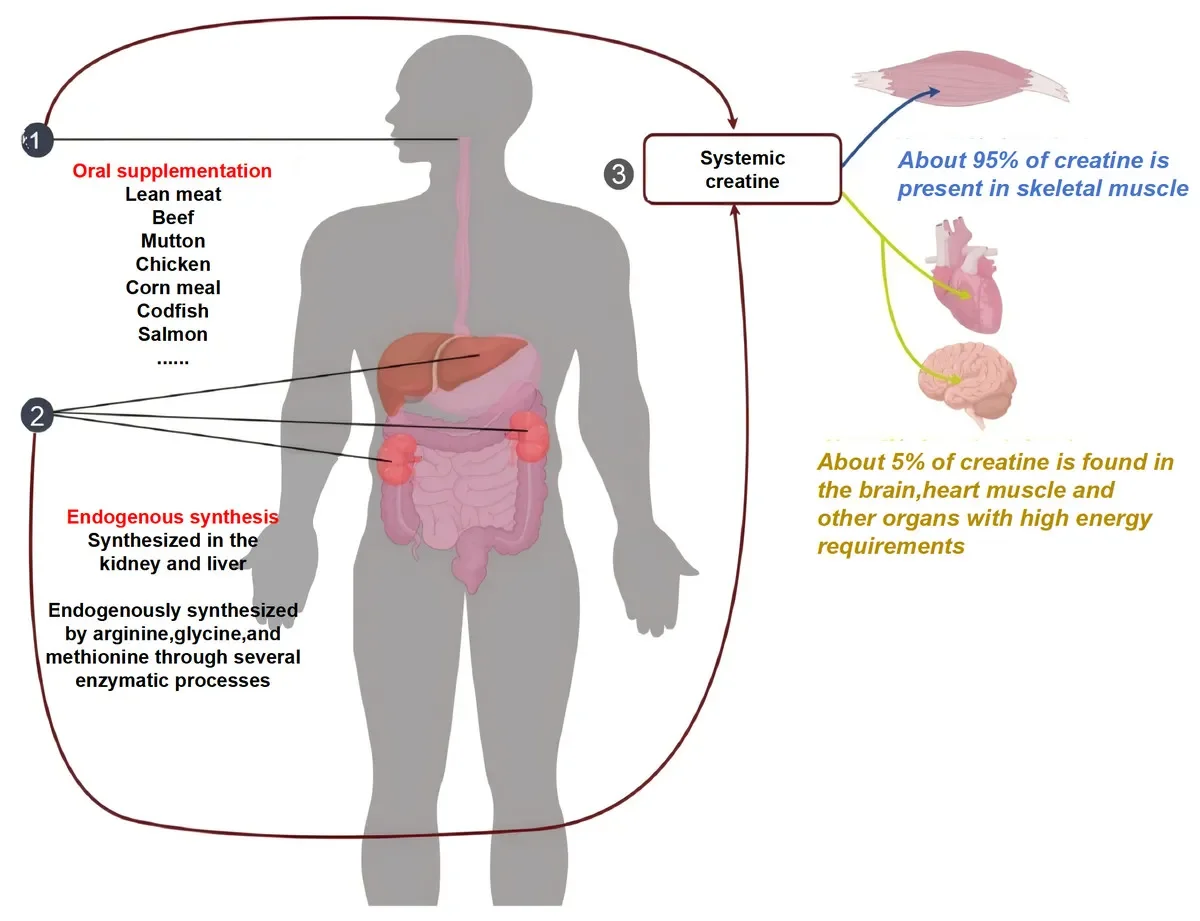
Creatine is a non-protein amino acid that naturally occurs in humans. It is synthesized in the liver and kidneys, but can also be taken up through diet or supplementation. Red meat and seafood tend to be key natural food sources of creatine. 95% of creatine in the body is found in skeletal muscle, and the other 5% is found in the brain, testes, and heart muscle (Zhang et. al, 2025).
Zhang et. al (2025). 10.7717/peerj.20380/fig-1
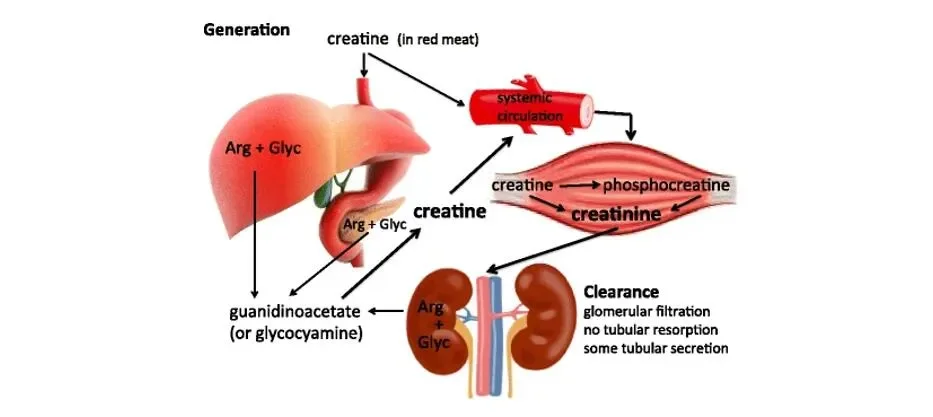
The way creatine works biochemically is very interesting. For endogenous creatine (made by our body): amino acids in the kidney form guanidinoacetate (GAA), an intermediate, that then become methylated in the liver. The liver produces the form of creatine that then is released and travels through the bloodstream to the muscles and other tissues. Exogenous creatine (aka from diet/supplementation): goes directly into the blood stream. Both types, exogenous and endogenous, are transported through the blood by a “creatine transporter” (SLC6A8), which also helps transport it across the membrane of cells.
From https://www.creative-proteomics.com/blog/creatinine-metabolomics-health.htm
When creatine is in the cell, it’s like an energy battery; it accepts the phosphate from ATP and becomes a “charged battery” storing energy potential. This form of creatine is called phosphocreatine (PCr). It stores the energy from ATP and can help recycle ATP quickly in the muscle cells by donating the phosphorus to ADP to create more ATP. If we remember from high school biology, ATP is the “energy molecule.” More energy = more power = more muscle output (strength) = gains. Well potentially…. studies have shown that dose, exercise type, and training intensity have different effects when using creatine.
What Research Says: Benefits of Creatine
There has been a lot of hype around creatine supplementation. The idea being that the more creatine available for the body, the faster the ATP recycling and higher energy output. This is backed scientifically, especially for high-energy output activities like weight lifting, sprinting, and other short, high-intensity activities.
Let’s look at the proven benefits/effects of creatine supplementation:
Significantly improves muscle strength in the general population.
Lower dose supplementation combined with high-intensity exercise shows augmented muscle performance (power output, strength, work capacity).
Untrained individuals show higher strength improvement (makes sense if starting from a lower baseline).
Quicker recovery after intense exercise or between sets.
Positive benefits in both males and females and older and younger populations.
Promising effects on brain health and brain bioenergetics (this is not as well researched, but studies are starting to show potential improvements to memory, neurodegenerative diseases, and mood disorders. I’ll write a separate article on this later).
The effects on muscle output, strength, high-intensity performance, and recovery are well researched and make creatine supplementation one of the most effective and popular supplements for building lean muscle.
To dive deeper into the science, look into the scientific articles listed at the bottom of this article.
Choosing the Best Form of Creatine
You may be tempted to just increase your red meat or fish intake, but it is important to note that cooking reduces the amount of creatine in these foods (does not mean they are still not a good source, just limited in amount). One of the best forms of creatine is powdered supplementation in the form of creatine monohydrate. The powdered version is easily absorbed by the gut and can mix well with water or other beverages. It has high bioavailability (99%) meaning most of what you ingest is available for use by the body.
When picking supplements something you have to be aware of as a consumer is that not all brands and their suppliers have pure products. The manufacturing environment and controls the company puts in place, impact the quality of the product you are receiving. This matters because there is potential for contaminants to be present in any supplement.
The Federal Drug Administration (FDA) regulates supplements in a way that puts more responsibility on the supplier of the supplement to do their own due diligence. This includes third-party testing, ensuring safety, and implementing good manufacturing practices (GMP). The FDA will of course step in if a product is found to be unsafe or contaminated. But there is no upfront approval needed to sell a creatine product.
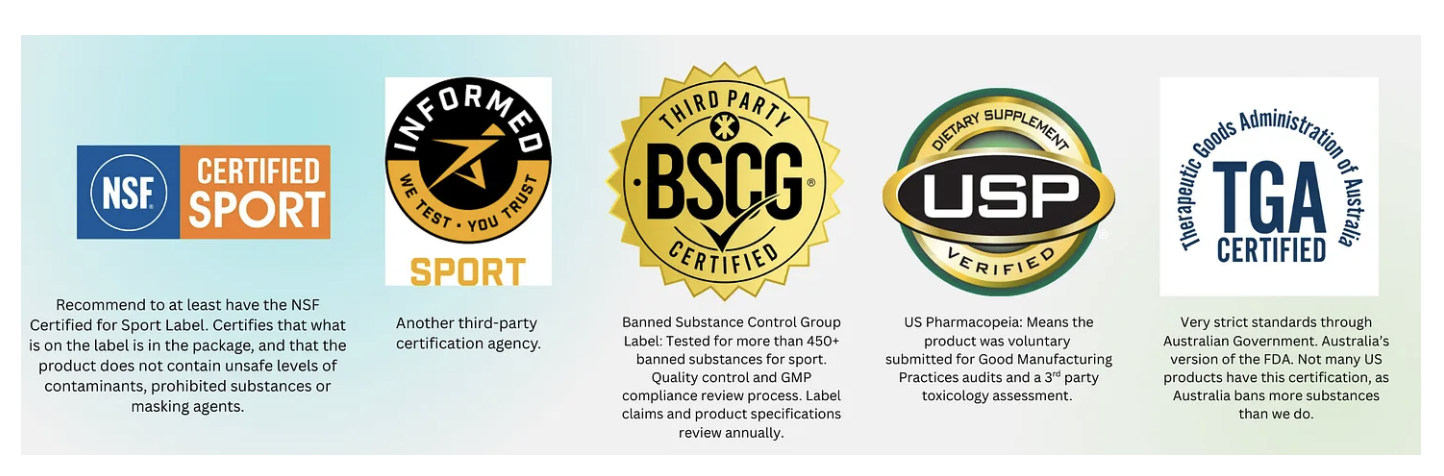
There are other agencies and testing groups that certify supplements based on stricter standards for purity, quality, and, safety - especially those used for sport. These include NSF’s Certified for Sport, Informed-Sport, Banned Substances Control Group and the U.S. Pharmacopeia (USP). When picking a supplement brand it is highly recommend to pick a brand that values and spends the time and money to receive these certifications. Look for these labels:
Recommended Dosages
According to research published by the International Society of Sports Nutrition, “The most effective way to increase muscle creatine stores is to ingest 5 g of creatine monohydrate (or approximately 0.3 g/kg body weight) four times daily for 5–7 days.” Then once stores are saturated, “…creatine stores can generally be maintained by ingesting 3–5 g/day, although some studies indicate that larger athletes may need to ingest as much as 5–10 g/day in order to maintain creatine stores.”
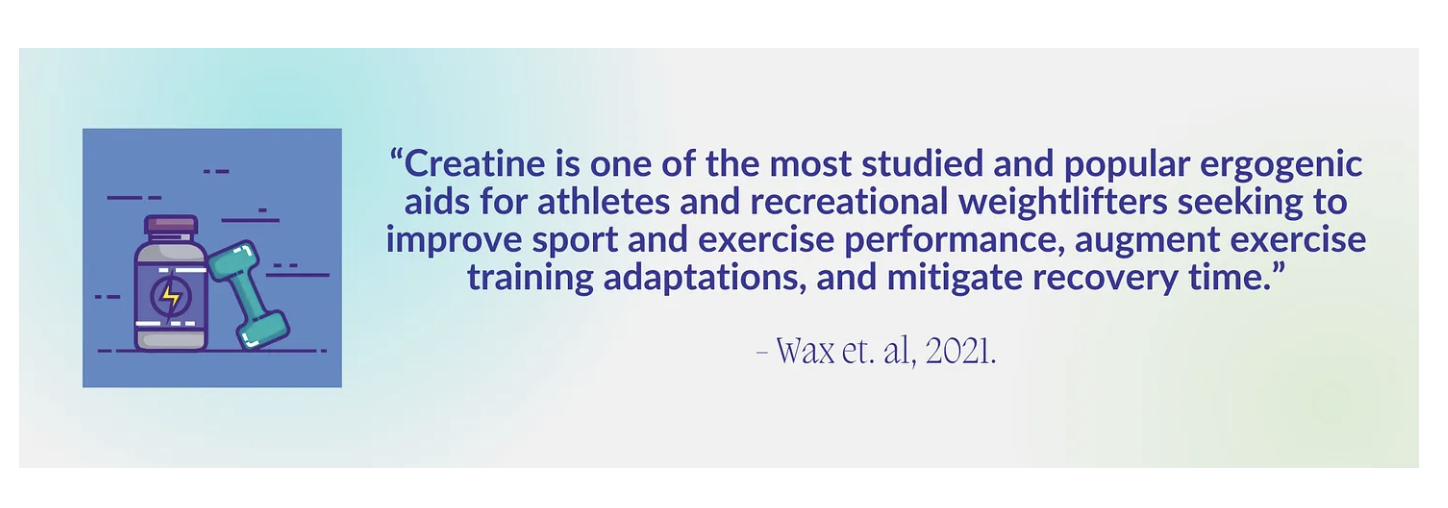
Another meta-analysis by Wax et al. (2021) found “Creatine supplementation, ingested at 0.3 g/kg/day for 3–5 consecutive days or 20g/day for 5–7 successive days, has been shown to quickly increase intramuscular creatine, yielding immediate ergogenic benefits. Correspondingly, a regimen of 3–5 g/day over 4 weeks increased creatine stores, augmented muscle performance, mitigated recovery factors, and resulted in muscle accretion.”
Because creatine works by saturating your muscle stores over time, once they are saturated, WHEN you take the creatine (before, during, or after a workout) does not matter as much.
However, studies have shown that taking creatine with carbohydrates and protein may help increase intramuscular creatine retention, “although the additional benefits in terms of performance outcomes appear to be nebulous” (Wax et al., 2021).
My Personal Favorite Creatine Supplement
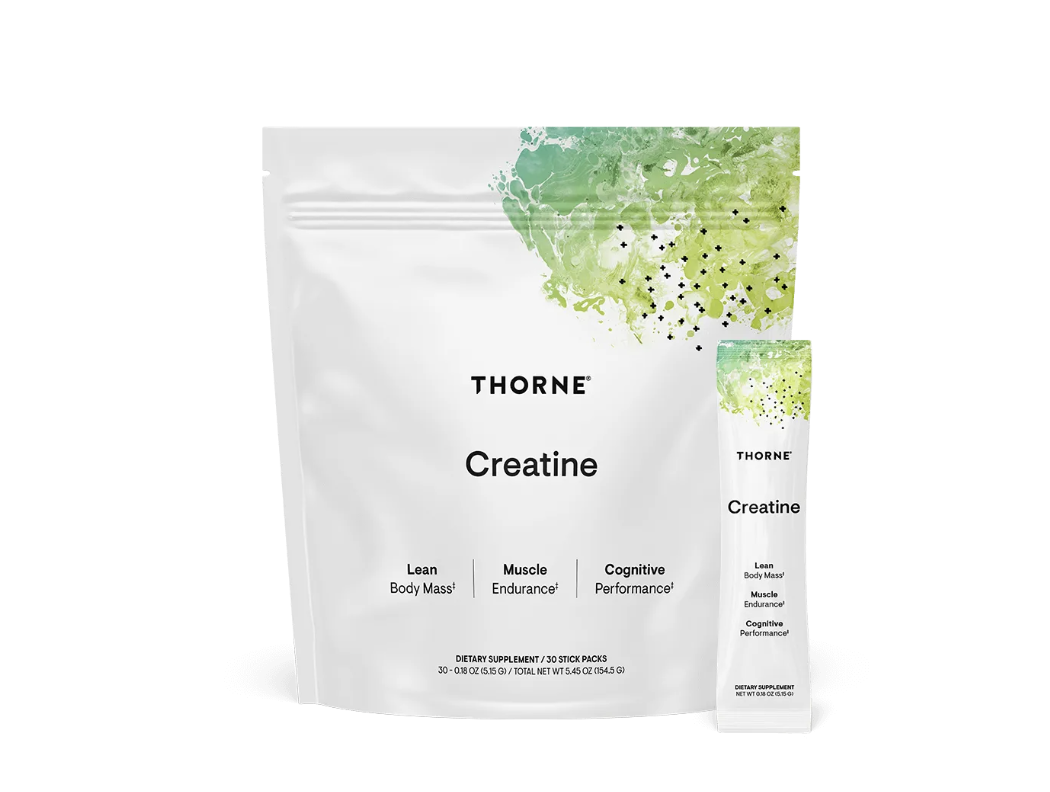
My personal recommendation for a creatine supplement are the Thorne travel packs. I like the individual packs because they are easy to take while traveling, or to work and the gym. They are flavorless- so easily mix with any beverage. They also have flavored versions in strawberry and pineapple orange. Thorne is one of the few brands I personally trust because:
They have very high quality and manufacturing standards.
Rigorous scientific research on the ingredients, bioavailability, and optimal forms of all their supplements.
They show real results over marketing hype, and are widely trusted by healthcare professionals and athletes.
Link to Buy This content is provided for informational purposes only. It is not sponsored or endorsed by Thorne, and the statements herein represent my own views and do not constitute claims or endorsements by Thorne.
I have been using Thorne’s supplements for about 4-5 years. I picked up their creatine in 2025. When I previously posted this article I was not an ambassador for Thorne, but now I am! So here is my affiliate link: https://get.aspr.app/SH1e0V.
My Personal Experience
After supplementing with creatine, I feel that it is easier to lift heavier weights in the gym and progress weekly in my weight overload. I find I recover faster and do not feel as sore. I also think it has helped me with focus and cognitively- especially at work or when researching for articles like this!
To Wrap it Up
The benefits of supplementing with creatine on skeletal muscle are undeniable, well-studied, and safe and effective. Preliminary research is showing potential beneficial effects on brain health and cognitive performance. Be on the lookout for another article in the future breaking this down further. If you made it this far, thank you for reading! I hope this made you smarter, a more educated consumer, provided clarity, and gave you the confidence to make better health decisions.